
Issue Areas
NNIP Partners make important contributions to their communities on a variety of issues. The pages below highlight and organize the work NNIP partners have done, bringing together activities, published products, and cross-site projects related to each topic. We'll list additional issue areas as our partners add new examples, so check back often.
If you are interested in topics not displayed here, use the site's general search box.
Every ten years, the Census Bureau conducts a constitutionally-mandated national household survey to count every resident in the United States. Local governments and nonprofit organizations, including NNIP Partners, are gearing up for the 2020 Census to ensure complete coverage in their communities, particularly of traditionally undercounted... [read more]

Absenteeism is an important indicator of how well children will perform in school. A number of our partners are helping school districts understand chronic absenteeism in their communities.
[read more]
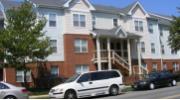
Community groups and policy makers have expressed a strong interest in maintaining and improving the stock of affordable housing in NNIP communities. Our partners research and report on the availability of affordable housing, the costs and benefits of gentrification, rent control, and reflect more broadly on how access to affordable housing... [read more]

Among the many factors contributing to the vitality of a city, arts and culture lie at the forefront. NNIP partners have been using arts and culture indicators to inform public policy, contribute to economic development and assess educational programs. In addition to the many applications of the arts, partners are also tracking the artistic... [read more]

A charter school is a public school that is independently run and generally draws students from across the local jurisdiction instead of a defined cachement area. Several NNIP Partners have done analysis on charter schools, such as student performance at charters compared to traditional public schools and the student characteristics and spatial... [read more]

Many partners have focused efforts to help to improve the well-being of children in low-income neighborhoods. Project examples include school readiness initiatives, child indicator reports, analysis on home visiting and support of promise neighborhood programs.
[read more]
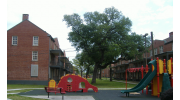
The Choice Neighborhoods (“Choice”) Initiative of the US Department of Housing and Urban Development aims to transform distressed, high-poverty neighborhoods into revitalized mixed-income neighborhoods. The Urban Institute and several local NNIP partners are involved in Choice Neighborhoods' planning and implementation.
[read more]

All of the NNIP partners have recurrently updated neighborhood data systems covering a variety of topics. In some cities, partners also use data within community indicator projects. In this approach, indicators are selected either across topical domains or with a focus (like children) to collectively track trends in community well-being and... [read more]

Nothing about us, without us. Community-engaged research centers the community that is the focus of the research. This shift to have community members more involved in the design, collection, analysis, interpretation, and dissemination of research ensures that the findings reflect the actual community and will have greater impact. There are a... [read more]

The community development field has recognized that just building housing is not enough, and many now invest in other critical assets such as schools, businesses, and parks. They also increasingly use market conditions and typologies to make decisions about where to invest.
[read more]

NNIP Partners are helping their local communities respond to the COVID-19 pandemic by providing needed data and analysis to inform decisionmaking for a more equitable response and recovery.
[read more]

Any organization that collects, analyzes, or disseminates data should establish formal systems to manage data responsibly, protect confidentiality, and document data files and procedures. NNIP has synthesized experiences of local NNIP Partners and collected resources from across the network on data governance, management, and security. [read more]
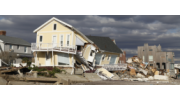
NNIP Partners have played a role in disaster preparedness and recovery. Their data holdings and ability to analyze information allow them to assess risk before disasters and help estimate the affected population and target recovery funding,
[read more]

Partners contribute to improving the education systems in their cities by analyzing high school graduation rates, enrollment projections, school spending and test scores. If you are interested in test scores specifically, type student performance in the site's main search box.
[read more]

NNIP Partners are engaged in work related to the elderly. In particular, partners have focused on studying housing needs of the baby-boom generation as they age.
[read more]

Information on employment and the local labor market are vital to understanding the economic situation faced by people in our communities. In the "Welfare to Work" cross site project, NNIP partners reported on how welfare reform affected the ability of recipients to find jobs and achieve economic independence. Other activities involve... [read more]

Environmental factors are a growing concern of many neighborhoods across the country. Many NNIP partners are similarly focused on sustainability in their neighborhoods. Local work includes creating environmental indicators such using data on energy use, open space, pollution levels, and accessibility, mapping community gardens and parks, and... [read more]

NNIP partners share a mission to ensure all communities have access to data and the skills to use information to advance equity and well-being across neighborhoods. Partners highlight and address inequities among different areas and racial groups and support stakeholders working towards more equitable solutions.
[read more]

Evictions can destabilize families and lead to poor health outcomes, material hardship, and job loss. Our partners are working with local stakeholders to understand evictions locally and inform advocacy and policy change.
[read more]

Access to healthy and affordable food is a growing issue area and related to several aspects of residents’ and neighborhoods’ well-being including obesity rates, economic development, environmental concerns, and family economic success. Examples of local work include studies of potential markets for a new grocery store, addressing child obesity,... [read more]

Over two-thirds of the NNIP partners are collaborating with their local networks to improve their communities' response to the foreclosure crisis. They are engaged in a wide range of activities, including analyzing the patterns and causes of foreclosures, helping practioners to tailor strategies to fit neighborhood contexts and rapidly... [read more]

NNIP Partners use local data to understand how neighborhoods in their communities are changing. They help advocates, governments, foundations, and nonprofits monitor gentrification pressures, promote equitable development, and prevent displacement.
[read more]

Our communities are only as healthy as the people living in them, and NNIP partners have conducted a wealth of research on local health conditions. Examples of local work include studies of local health disparities, compiling new neighborhood-level health indicators, and creating web applications that disseminate health information to a wider... [read more]

Housing markets and their intricate relationship with neighborhood conditions and economic growth, have been of growing interest since the foreclosure crisis. NNIP partners have looked at housing market data to track and fight the spread of blight, examine the effects of foreclosures on our communities, and strategically target new areas for... [read more]

Immigrants have long been a vital part of the social and economic fabric of regions where they live. Partner organizations analyze local and national data to describe the trends in immigration and the wellbeing of immigrant families and children. [read more]

Integrated Data Systems (IDS) link individual-level data from multiple agencies and systems such as schools, juvenile justice, and human services. The systems are used for case management, program monitoring, policy research, and evaluation. NNIP promotes the expansion of access to information in IDS and the inclusion of data on place in IDS.... [read more]

The Neighborhood Stabilization Program (NSP) was established by HUD to help stabilize communities that have suffered from foreclosures and abandonment. NNIP partners have been highly involved in the effects of foreclosures on their communities, and some have realized their work with NSP resources.
[read more]

The open data movement seeks to improve government transparency and empower citizens with pertinent information about their cities and neighborhoods. NNIP partners understand how to use public data to engage and benefit low-income communities, and help ensure that the increase in data availability does not widen the information gap between rich... [read more]

NNIP partners are increasingly taking advantage of advances in open source software development. Using open source tools eliminates the cost of ongoing licenses and increases the chance of replicating the application in other places. Weave offers the most mature example of open source software related to NNIP, but individual partner... [read more]

This category reflects our partners' work in strategic and business planning for their organizations.
[read more]

Performance measurement refers to tracking metrics about the outputs provided by a government agency or nonprofit organization. Many NNIP partners are helping local organizations develop ways to measure their services, review their own progress, and improve their programs.
[read more]

The challenges of returning to one’s community after incarceration are high, and the solutions are not simple. Eleven NNIP partners were part of the “Reentry Mapping Network” cross site project working to map and analyze prisoner reentry and related issues in their communities. Through this and other work, they have been able to help local... [read more]

The U.S. Department of Education launched the Promise Neighborhood grant program in 2010. Inspired by the Harlem's Children's Zone, the program seeks to improve the educational and developmental outcomes of children in the most distressed communities by building a continuum of academic programs and family and community supports. The... [read more]

NNIP partners use data to advance community safety and reform of the criminal legal system. They use data to show disparities in policing and incarceration, explore the meaning of safety in communities, and work with communities to support violence prevention efforts.
[read more]

We live in a highly mobile society, and while changing residences can be a family's way of getting to a place with better neighborhoods and schools, frequent mobility can also be a sign of family instability and a great cause of stress. NNIP partners report on mobility and its effects on employment, children's education, health, and... [read more]

The school readiness system encompasses a broad array of programs and policies that prepare children for school so that they are healthy and ready to succeed. From tracking early education program such as Head Start to monitoring quality in child care, to evaluating home visiting programs, NNIP partners are committed to improving the chances of... [read more]

Students can play a significant role at data intermediaries, organizations that provide data and analytic services to their community. NNIP Partners and similar organizations can successfully involve students in the provision of community data services by assessing opportunities for student involvement, developing a recruitment strategy,... [read more]

Some NNIP partners were recipients of the first round of HUD's Sustainable Communities Grants and will be implementing the grant by engaging in a comprehensive regional planning process to foster sustainable and equitable communities.
[read more]

The transportation mix in neighborhoods and their regions affects residents’ housing choices and access to jobs and services. Our partners have looked at a range of transportation issues, including commuting patterns, the impact of new light rail lines, and the disparities in transit access among neighborhoods.
[read more]

A surplus of vacant homes, especially when abandoned or blighted, can detract from a neighborhood’s health in several ways. Poorly maintained structures and lots can drag down surrounding property values and signal a neighborhood’s acceptance of other types of disorder. Unsecured buildings are hazardous in themselves, plus may provide shelter... [read more]

Our legacy of racism in policy and practice has sustained a distressing gap in wealth. NNIP Partners are collaborating with local stakeholders to understand the wealth gap, its drivers, and use data to inform strategies to build wealth for people and communities of color.
[read more]

Youth face a number of challenges as they transition from childhood to adulthood. Communities should particularly take an interest in facilitating youth development, stability, and workforce readiness. Partners have a range of work focusing on youth, including analyzing important data about this population, analyzing program effectiveness, and... [read more]